

What’s the Difference?
When it comes to modern surface materials, Quartz Stone and Sintered Stone are two of the most popular choices for kitchens, bathrooms, and interior design. While they may look similar at first glance, they have different compositions, manufacturing processes, and performance characteristics.
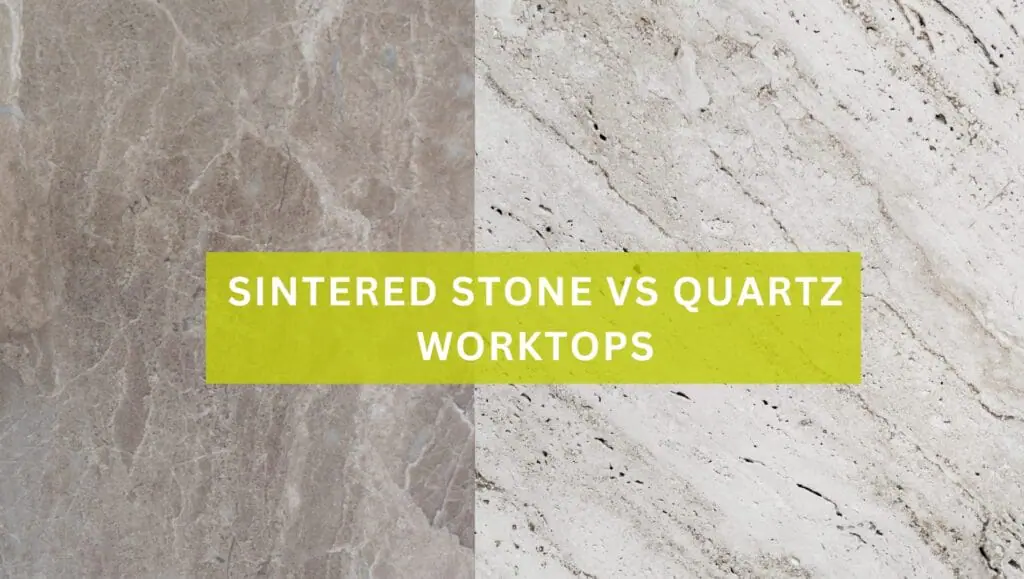
Quartz Stone (Engineered Quartz)
Quartz stone is a man-made surface composed of about 90–95% natural quartz crystals mixed with resins and pigments. It is widely used for countertops and vanity tops due to its durability and attractive appearance.
Key Features:
- ✅ Highly durable and scratch-resistant
- 💧 Non-porous and easy to maintain
- 🔥 Heat-resistant, but can be damaged by extreme heat
- 🎨 Available in a wide range of colors and patterns
- ❗ UV-sensitive – Not ideal for outdoor use
Sintered Stone
Sintered stone is created by compressing natural minerals using extreme heat and pressure – mimicking the natural process of stone formation. It contains no resin, making it 100% mineral-based and environmentally friendly.
Key Features:
- 🔥 Ultra heat-resistant – Can handle direct contact with hot pots and pans
- 🧼 Non-porous and hygienic – Resists stains, mold, and bacteria
- 🌞 UV-resistant – Suitable for outdoor applications
- 🪨 Scratch- and impact-resistant
- 🧱 Can be made in large, thin slabs – Ideal for wall cladding and large surfaces
Which One Should You Choose?
- Choose Quartz Stone if you want an elegant, cost-effective solution for indoor countertops with lots of color choices.
- Choose Sintered Stone for high-performance, outdoor or heat-intensive areas, or if you need extra durability and large-format designs.